Read the transcript
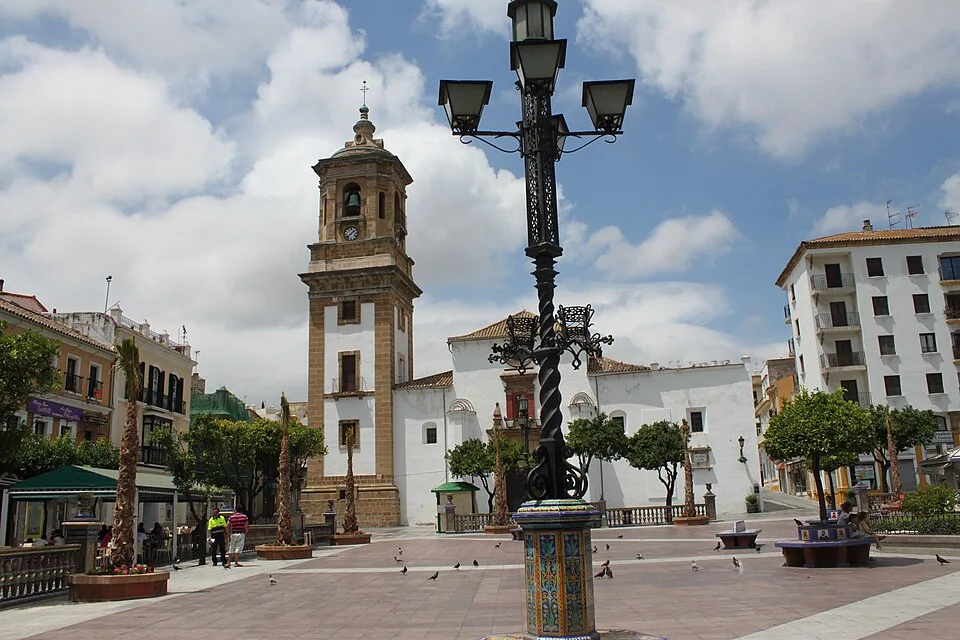
The tower of Nuestra Señora de la Palma helps you find your way, but also read Algeciras. From Plaza Alta, the church speaks of a city that began growing again and wanted to recognise itself in a shared building. Approaching slowly takes you from that familiar silhouette to the story of a structure built and extended by generations. The Andalusian government's heritage record dates the start of construction to 1724 and its opening for worship to 1738. Final consecration came in 1829. The building belongs to the late Baroque, with vernacular features and colonial echoes; its original three aisles were extended with two lateral aisles at the end of the eighteenth century. Its listing as a Bien de Interés Cultural was approved in 2018, recognising its importance to the city's refounding. Look at the façade from a distance to understand how the tower dominates its surroundings without becoming detached from them. Inside, when access is possible, follow the succession of aisles and observe how the extensions add complexity to a space that seems simple from outside. Architecture is best enjoyed by comparing proportions and routes, rather than trying to memorise a list of styles. Allow time for both exterior and interior, adapting your visit to religious celebrations. From the doorway, you can cross the square to the Europa chapel or take the route towards San Isidro. Do not confuse the beginning of construction, the opening for worship and the consecration: they are different moments in a long history.
La historia que guarda este lugar
La torre de Nuestra Señora de la Palma ayuda a orientarse, pero también a leer Algeciras. Desde Plaza Alta, el templo habla de una ciudad que volvió a crecer y quiso reconocerse en un edificio común. Acercarse despacio permite pasar de esa silueta conocida a la historia de una obra levantada y ampliada por generaciones.
El expediente patrimonial de la Junta sitúa el comienzo de la construcción en 1724 y la apertura al culto en 1738. La consagración definitiva llegó en 1829. El edificio pertenece al barroco tardío, con rasgos populares y aires coloniales; sus tres naves iniciales se ampliaron con dos laterales al finalizar el siglo XVIII. La inscripción como Bien de Interés Cultural se aprobó en 2018, reconociendo su relevancia para la refundación de la ciudad.
Detente, mira, descubre
Mira la fachada desde cierta distancia para entender cómo la torre domina el entorno sin aislarse de él. Dentro, cuando sea posible acceder, sigue la sucesión de naves y observa cómo las ampliaciones hacen más complejo un espacio que desde fuera parece sencillo. La arquitectura se disfruta mejor comparando proporciones y recorridos que intentando memorizar una lista de estilos.
Cómo disfrutar la visita
Dedica tiempo tanto al exterior como al interior y adapta la visita a las celebraciones religiosas. Desde la puerta puedes continuar a la capilla de Europa, cruzando la plaza, o tomar el recorrido hacia San Isidro. No confundas la fecha de inicio de obra, la apertura al culto y la consagración: son momentos distintos de una historia larga.
Fuentes para conocer más
Descúbrelo dentro de un recorrido
Algeciras monumental, paso a paso →
The church of Nuestra Señora de la Palma is one of central Algeciras’s heritage landmarks. Its connection with Plaza Alta makes it part of a city walk; appreciate the building and check indoor visiting arrangements separately.
What to look out for
- Religious heritage
- Plaza Alta surroundings
Planning your visit
Check opening arrangements before planning your visit; a map marker does not guarantee indoor access.
The map
Approximate place locations, not hiking tracks.
Before you go
Check the official source for current access and conditions.
Confirm access, opening hours and conditions with the official source. Follow signs and check restrictions in natural areas. We do not offer verified GPX tracks.
Sources consulted
www.spain.info ↗Sources reviewed · 2026-09-12