ALGECIRAS · RECORRIDO A PIE
Plazas, devociones y calles blancas
Un recorrido recogido para comprender el centro a través de sus lugares de encuentro. Une dos templos de Plaza Alta con San Isidro y termina en la ciudad comercial. Ideal para quien prefiere pocas paradas, bien contadas y con tiempo para mirar.
Entre dos y tres horas orientativas, según paradas · 5 paradas
Favourites and visits are saved only in this browser. They do not sync across devices.
TU PASEO, PARADA A PARADA
Abre el recorrido y empieza a caminar
Las paradas se visitan en este orden. Google Maps calcula el camino peatonal; las indicaciones de cada tramo te cuentan qué buscar al llegar.
0 de 5 paradas visitadas · guardado en este dispositivo
En recorridos largos dividimos el enlace para conservar todas las paradas en móvil. Comprueba aperturas y señalización; la navegación puede variar por obras o accesos.Read the transcript
Squares, devotions and white streets
An intimate route to understand the centre through its meeting places. It connects two churches on Plaza Alta with San Isidro and finishes in the commercial city. Ideal for those who prefer fewer stops, well explained and with time to look.
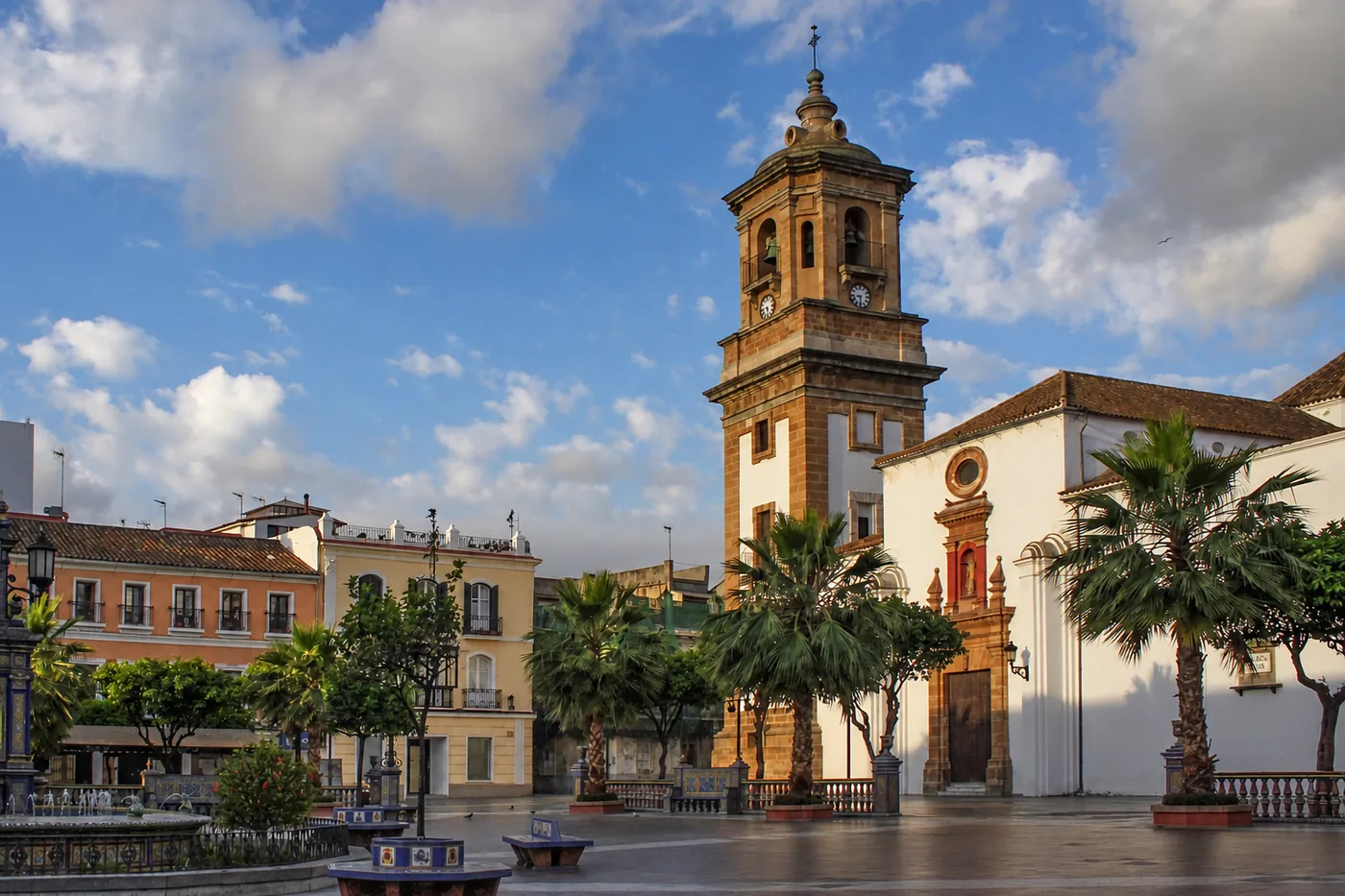
Algeciras is easier to understand when you stop simply passing through and learn to linger. Plaza Alta invites you to do just that: sit down, watch the streets meet and discover a city in conversation around its most recognisable space. Ceramics and religious façades turn an everyday pause into a first lesson in urban history. The square was laid out in 1807 on the initiative of General Castaños and was initially called Plaza del Almirante. Its obelisk disappeared in 1926; three years later, the ceramic paving was commissioned from workshops in Seville. This succession of alterations and names explains why the place is the creation of many eras, rather than an untouched scene from the past. The city has recorded its political changes and its ways of occupying public space here. Walk around once to take in the whole square, then again to follow the details in the paving. Compare the presence of La Palma with the more intimate scale of the Europa chapel: two ways of giving shape to the same square. Then find a bench overlooking the entrances of the streets. The visit becomes richer when you also watch the comings and goings of those who use this place every day. Allow yourself a proper pause before continuing towards the market or San Isidro. You can visit the square regardless of whether the churches are open; if you want to enter them, check their opening times separately. This is the best place to begin the centre's monumental walk and return to when you finish.
Stand in the centre of Plaza Alta and approach La Palma, observing how the tower organises perspectives. Confirm the church is open before counting on an interior visit.
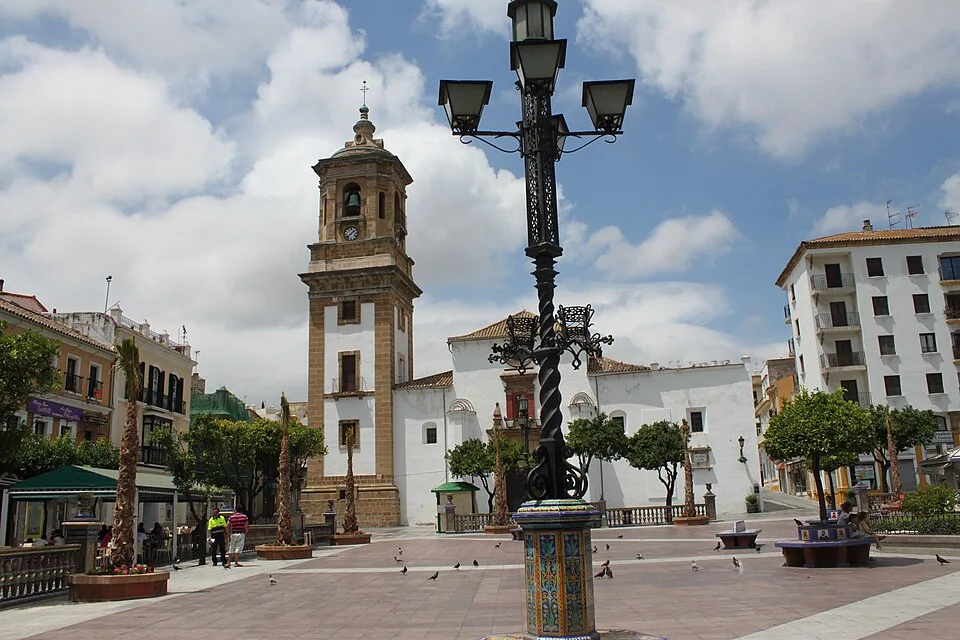
The tower of Nuestra Señora de la Palma helps you find your way, but also read Algeciras. From Plaza Alta, the church speaks of a city that began growing again and wanted to recognise itself in a shared building. Approaching slowly takes you from that familiar silhouette to the story of a structure built and extended by generations. The Andalusian government's heritage record dates the start of construction to 1724 and its opening for worship to 1738. Final consecration came in 1829. The building belongs to the late Baroque, with vernacular features and colonial echoes; its original three aisles were extended with two lateral aisles at the end of the eighteenth century. Its listing as a Bien de Interés Cultural was approved in 2018, recognising its importance to the city's refounding. Look at the façade from a distance to understand how the tower dominates its surroundings without becoming detached from them. Inside, when access is possible, follow the succession of aisles and observe how the extensions add complexity to a space that seems simple from outside. Architecture is best enjoyed by comparing proportions and routes, rather than trying to memorise a list of styles. Allow time for both exterior and interior, adapting your visit to religious celebrations. From the doorway, you can cross the square to the Europa chapel or take the route towards San Isidro. Do not confuse the beginning of construction, the opening for worship and the consecration: they are different moments in a long history.
Cross the square again towards the Europa sanctuary. The short distance lets you compare scale, façade and relationship with public space without breaking the walk's rhythm.
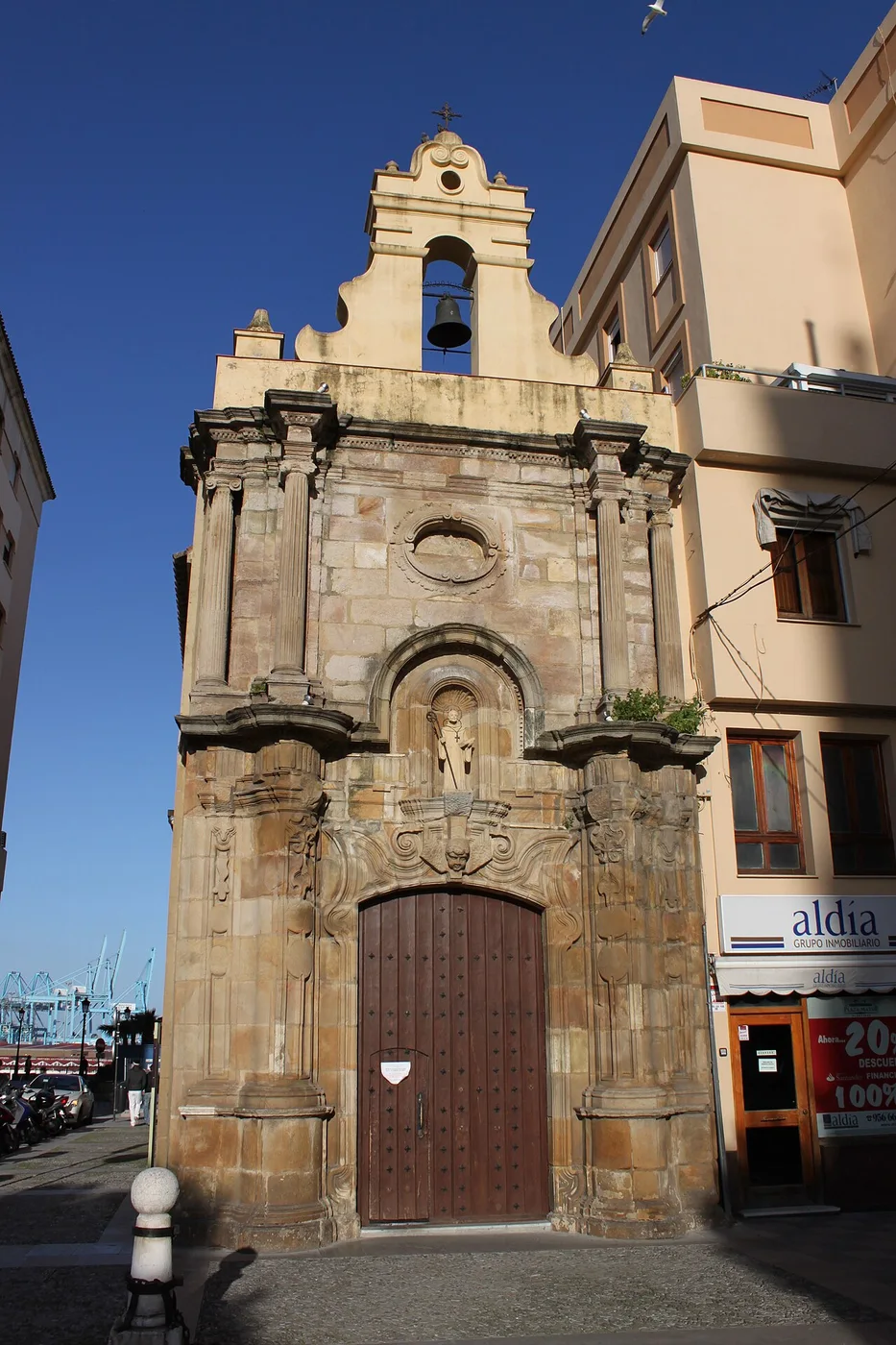
On one side of Plaza Alta, the Sanctuary of Nuestra Señora de Europa offers a visit that is small in scale and great in significance. Against the movement of the square, its presence invites close attention: some places matter not because they are monumental, but because of everything they have accompanied through time. The city's historical account connects the arrival of people from Gibraltar in 1704 with a hermitage belonging to the Gálvez family, identified with the present chapel. This context places the church within the rebirth of modern Algeciras. The municipal description also recalls a period of closure and use as a carpentry workshop before restoration and the return of religious use: heritage can lose its purpose and find it again. First consider the relationship between façade, square and side streets. If the sanctuary is open, look at the images of Cristo Atado a la Columna and María Santísima de las Lágrimas, associated with Holy Monday in Algeciras. Rather than collecting photographs, spend a few minutes understanding how devotion keeps a building alive and gives it a place in a community's calendar. The exterior stop fits naturally between Plaza Alta and the descent towards Calle Real. To enter, respect services and confirm opening times; continuous tourist access should not be assumed. Combine this visit with La Palma to recognise two scales of religious heritage without leaving the historic heart.
Continue towards San Isidro along the pedestrian itinerary to its small square. Then explore a short circuit through the neighbourhood's public streets and return to the square to orient yourself.
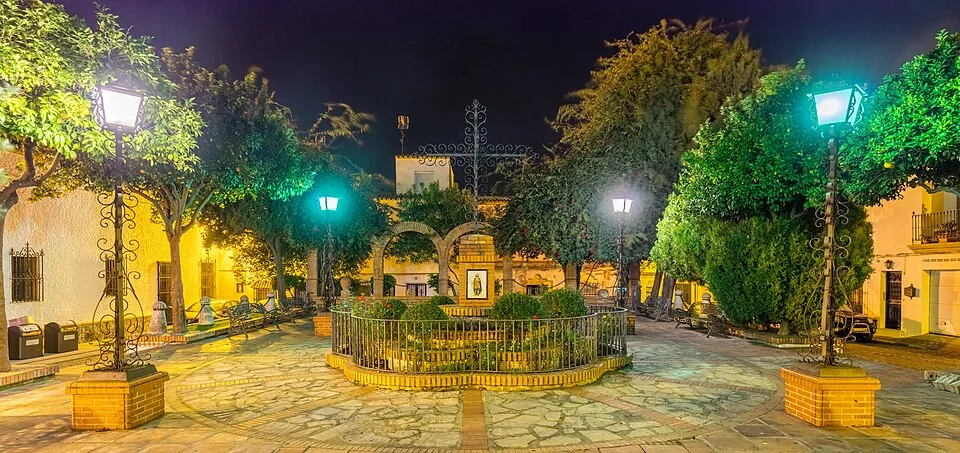
San Isidro reveals itself at the pace of its slopes. Leaving the busiest streets behind, the visit becomes intimate: an iron grille, a corner, a changing perspective after climbing a few metres. Here the whole matters as much as each detail, because the neighbourhood's appeal grows from a way of living in the city. San Isidro's heritage has both an urban and a devotional dimension. The chapel of San Isidro Labrador houses the images of Jesús de Medinaceli and María Santísima de la Esperanza. Its small square is a meeting place and a setting for cultural activities, while streets such as Gloria, Montereros, Ruiz Tagle and José Román form the network that defines the neighbourhood. The continuity between homes, narrow streets and shared spaces gives value to this everyday landscape, made for slow exploration. Notice the scale of the façades, the ironwork of the grilles and the relationship between cobbles and slopes. Pause in the small square and compare its atmosphere with Plaza Alta: both are places of community life, but their rhythms and dimensions differ. The best photograph often appears when you look back after a short climb, without entering doorways or intruding into private courtyards. Include the neighbourhood after Plaza Alta and before going down towards the market, leaving time to wander. Slopes and paving can be uncomfortable for some people; choose a route suited to your mobility. Stay on public streets and treat the place as what it is: a living neighbourhood, not a tourist stage set.
Descend towards the commercial centre and join Calle Real to reach the market. Finish by observing the dome and activity in the square; the route remains possible even after stalls have closed.
At Mercado Ingeniero Torroja, it is worth making two visits at once: one with your eyes on the roof and another at stall level. Few buildings explain so well how a great work of architecture can belong to a city's daily shopping, working life and conversation. Built in 1935, the market brings together Eduardo Torroja's engineering and the contribution of architect Manuel Sánchez Arcas. Its octagonal plan is covered by a concrete shell almost 48 metres in diameter, supported by eight peripheral pillars. This solution frees the interior space and turns a commercial requirement into a landmark of Spanish Rationalism. It was declared a Bien de Interés Cultural in 2001. Find a position from which your eyes can follow the roof all the way to its supports. The sense of spaciousness depends precisely on what is absent from the middle: a succession of supports interrupting the space. Then look again at the entrances and the relationship with the square. The architecture does not end at the roof; it also organises how buyers and sellers enter, meet and move around. If you want to see the market working, check opening times and plan a morning stop. Buy something if you wish, and ask permission before photographing people or stalls at close range. From Plaza Alta, you can descend along Radio Algeciras and Real; continuing afterwards towards La Caridad takes you from the commercial city to its cultural collections.
Ubicación de las paradas. Para seguir el camino entre ellas, abre las indicaciones de cada tramo.
PARADA 01 · Algeciras
Plaza Alta
Modified viewpoint; some details may differ from the actual place. Images and licences ↗
Algeciras se entiende mejor cuando se deja de atravesarla y se aprende a quedarse. Plaza Alta invita justamente a eso: sentarse, mirar cómo se cruzan las calles y descubrir una ciudad que conversa alrededor de su espacio más reconocible. La cerámica y las fachadas religiosas convierten una pausa cotidiana en una primera lección de historia urbana.
La historia que estás viendo
La plaza se trazó en 1807 por iniciativa del general Castaños y recibió inicialmente el nombre de Plaza del Almirante. Su obelisco desapareció en 1926; tres años después se encargó a talleres sevillanos la solería cerámica. Esa sucesión de reformas y nombres explica que el lugar sea una construcción de muchas épocas, no una escenografía intacta del pasado. La ciudad ha ido escribiendo aquí sus cambios políticos y su manera de ocupar el espacio público.
Fíjate en este detalle
Haz una primera vuelta mirando el conjunto y otra siguiendo los detalles del pavimento. Compara la presencia de La Palma con la escala más recogida de la capilla de Europa: dos maneras de ordenar una misma plaza. Busca después un banco desde el que ver las entradas de las calles. La visita gana cuando se observa también el ir y venir de quienes utilizan este lugar todos los días.
Reserva una pausa real antes de continuar hacia el mercado o San Isidro. Puedes visitar la plaza sin depender de la apertura de los templos; si quieres entrar en ellos, comprueba sus horarios por separado. Es el mejor punto para comenzar el recorrido monumental del centro y regresar al terminar.
Sitúate en el centro de Plaza Alta y acércate a La Palma observando cómo la torre ordena las perspectivas. Confirma si el templo está abierto antes de contar con la visita interior.
Seguir este tramo en Google Maps ↗PARADA 02 · Algeciras
Church of Nuestra Señora de la Palma

Iglesia de Nuestra Señora de la Palma · Resized for the web · Images and licences ↗
La torre de Nuestra Señora de la Palma ayuda a orientarse, pero también a leer Algeciras. Desde Plaza Alta, el templo habla de una ciudad que volvió a crecer y quiso reconocerse en un edificio común. Acercarse despacio permite pasar de esa silueta conocida a la historia de una obra levantada y ampliada por generaciones.
La historia que estás viendo
El expediente patrimonial de la Junta sitúa el comienzo de la construcción en 1724 y la apertura al culto en 1738. La consagración definitiva llegó en 1829. El edificio pertenece al barroco tardío, con rasgos populares y aires coloniales; sus tres naves iniciales se ampliaron con dos laterales al finalizar el siglo XVIII. La inscripción como Bien de Interés Cultural se aprobó en 2018, reconociendo su relevancia para la refundación de la ciudad.
Fíjate en este detalle
Mira la fachada desde cierta distancia para entender cómo la torre domina el entorno sin aislarse de él. Dentro, cuando sea posible acceder, sigue la sucesión de naves y observa cómo las ampliaciones hacen más complejo un espacio que desde fuera parece sencillo. La arquitectura se disfruta mejor comparando proporciones y recorridos que intentando memorizar una lista de estilos.
Dedica tiempo tanto al exterior como al interior y adapta la visita a las celebraciones religiosas. Desde la puerta puedes continuar a la capilla de Europa, cruzando la plaza, o tomar el recorrido hacia San Isidro. No confundas la fecha de inicio de obra, la apertura al culto y la consagración: son momentos distintos de una historia larga.
Cruza de nuevo la plaza hacia el santuario de Europa. La corta distancia permite comparar escala, fachada y relación con el espacio público sin romper el ritmo del paseo.
Seguir este tramo en Google Maps ↗PARADA 03 · Algeciras
Shrine of Nuestra Señora de Europa

Santuario de Nuestra Señora de Europa · Resized for the web · Images and licences ↗
A un lado de Plaza Alta, el Santuario de Nuestra Señora de Europa propone una visita pequeña en escala y grande en significado. Frente al movimiento de la plaza, su presencia invita a mirar con atención: hay lugares cuya importancia no está en la monumentalidad, sino en todo lo que han acompañado a lo largo del tiempo.
La historia que estás viendo
La historia municipal vincula el asentamiento de población procedente de Gibraltar en 1704 con una ermita de la familia Gálvez, identificada con la actual capilla. Ese contexto permite entender el templo dentro del renacimiento de la Algeciras moderna. La ficha municipal recuerda también una etapa de cierre y uso como carpintería antes de su rehabilitación y recuperación religiosa: el patrimonio puede perder su función y volver a encontrarla.
Fíjate en este detalle
Contempla primero la relación entre fachada, plaza y calles laterales. Si el santuario está abierto, observa las imágenes del Cristo Atado a la Columna y María Santísima de las Lágrimas, vinculadas al Lunes Santo algecireño. Más que acumular fotografías, dedica unos minutos a comprender cómo las devociones mantienen vivo un edificio y lo incorporan al calendario de una comunidad.
La parada exterior encaja de forma natural entre Plaza Alta y el descenso hacia calle Real. Para entrar, respeta los actos de culto y confirma la apertura; no se presupone un horario turístico continuo. Combina esta visita con La Palma para reconocer dos escalas del patrimonio religioso sin desplazarte fuera del corazón histórico.
Continúa hacia San Isidro siguiendo el itinerario peatonal hasta su plazoleta. Explora después un pequeño circuito por las calles públicas del barrio y regresa a la plaza para orientarte.
Seguir este tramo en Google Maps ↗PARADA 04 · Algeciras
San Isidro neighbourhood

Barrio de San Isidro · Resized for the web · Images and licences ↗
San Isidro se descubre a la velocidad de sus cuestas. Al abandonar las calles más transitadas, la visita se vuelve próxima: una reja, una esquina, el cambio de perspectiva al subir unos metros. Aquí interesa tanto el conjunto como cada detalle, porque el atractivo del barrio nace de una manera de habitar la ciudad.
La historia que estás viendo
El patrimonio de San Isidro tiene una dimensión urbana y otra devocional. La capilla de San Isidro Labrador guarda las imágenes de Jesús de Medinaceli y María Santísima de la Esperanza. Su plazoleta es un lugar de encuentro y actividad cultural, mientras calles como Gloria, Montereros, Ruiz Tagle y José Román dibujan el entramado que identifica al barrio. La continuidad entre casas, pequeñas calles y espacios compartidos da valor a este paisaje cotidiano, hecho para recorrerlo despacio.
Fíjate en este detalle
Presta atención a la escala de las fachadas, al hierro de las rejas y a la relación entre adoquines y pendientes. Detente en la plazoleta y compara su ambiente con el de Plaza Alta: ambos son espacios de convivencia, pero tienen ritmos y dimensiones diferentes. La mejor fotografía suele aparecer al mirar hacia atrás después de una pequeña subida, sin entrar en portales ni invadir patios privados.
Incluye el barrio después de Plaza Alta y antes de bajar hacia el mercado, dejando margen para deambular. Las cuestas y el pavimento pueden resultar incómodos para algunas personas; elige un recorrido adecuado a tu movilidad. Mantén el paseo por calles públicas y trata el lugar como lo que es: un barrio vivo, no un decorado turístico.
Baja hacia el centro comercial y enlaza con calle Real para llegar al mercado. Termina mirando la cúpula y la actividad de la plaza; la ruta se puede hacer aunque los puestos ya hayan cerrado.
Seguir este tramo en Google Maps ↗PARADA 05 · Algeciras
Ingeniero Torroja Market
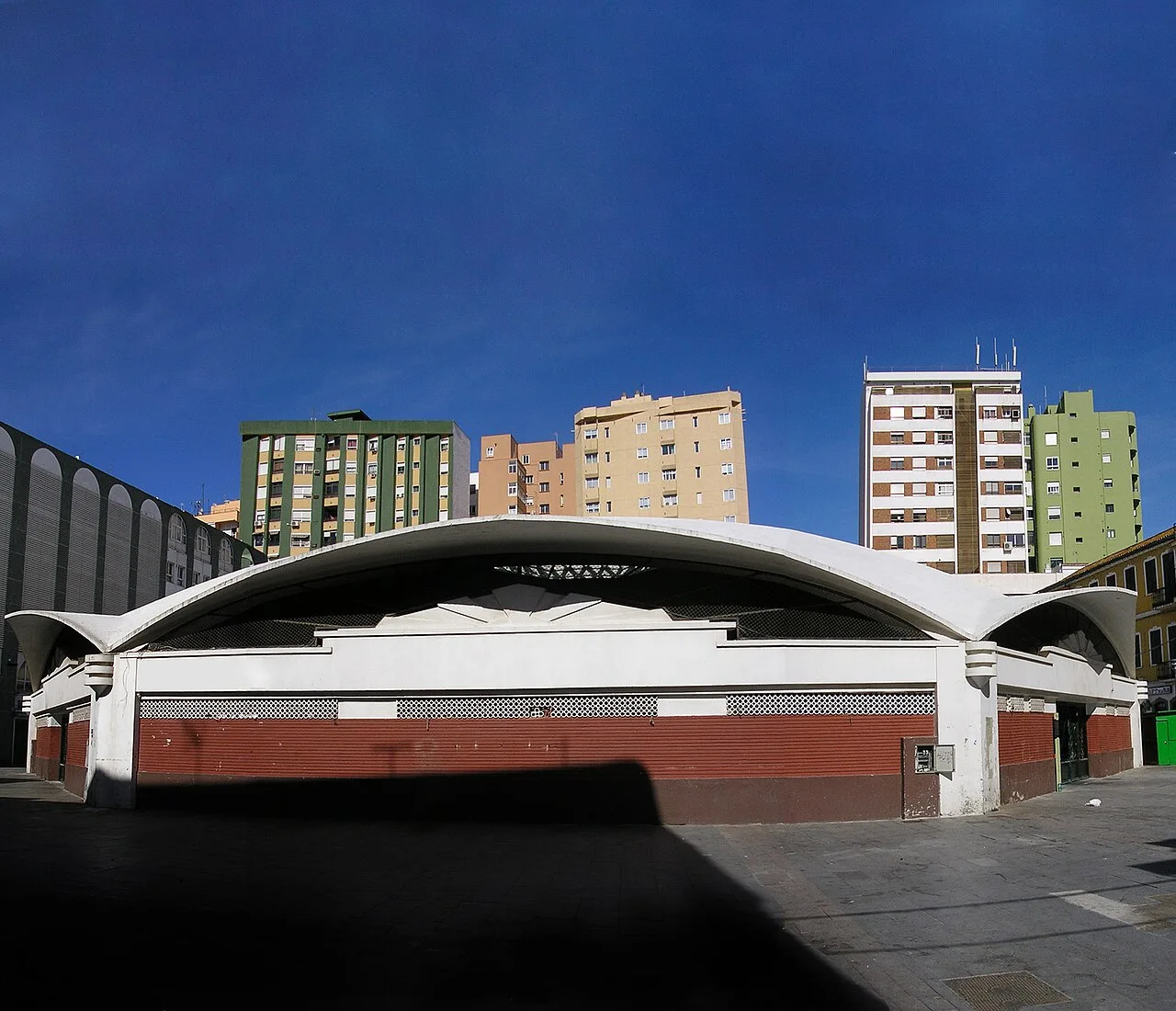

Mercado Ingeniero Torroja · Resized for the web · Images and licences ↗
En el Mercado Ingeniero Torroja conviene hacer dos visitas a la vez: una con los ojos puestos en la cubierta y otra a la altura de los puestos. Pocos edificios explican tan bien que una gran obra de arquitectura puede formar parte de la compra diaria, del trabajo y de la conversación de una ciudad.
La historia que estás viendo
Construido en 1935, el mercado reúne la ingeniería de Eduardo Torroja y la intervención del arquitecto Manuel Sánchez Arcas. Su planta octogonal se cubre con una lámina de hormigón de casi 48 metros de diámetro, apoyada en ocho pilares periféricos. La solución deja libre el espacio interior y convierte una necesidad comercial en un hito del racionalismo español. Fue declarado Bien de Interés Cultural en 2001.
Fíjate en este detalle
Busca un punto donde puedas seguir visualmente la cubierta hasta los apoyos. La sensación de amplitud depende precisamente de lo que no aparece en medio: una sucesión de soportes que interrumpa el espacio. Después vuelve a mirar los accesos y la relación con la plaza. La arquitectura no termina en su techo; también organiza cómo entran, se encuentran y circulan compradores y vendedores.
Si quieres conocer el mercado en funcionamiento, consulta sus horarios y plantea la parada por la mañana. Compra algo si te apetece y pide permiso antes de fotografiar personas o puestos de cerca. Desde Plaza Alta se puede descender por Radio Algeciras y Real; después, continuar hacia La Caridad permite pasar de la ciudad comercial a sus colecciones culturales.