Read the transcript
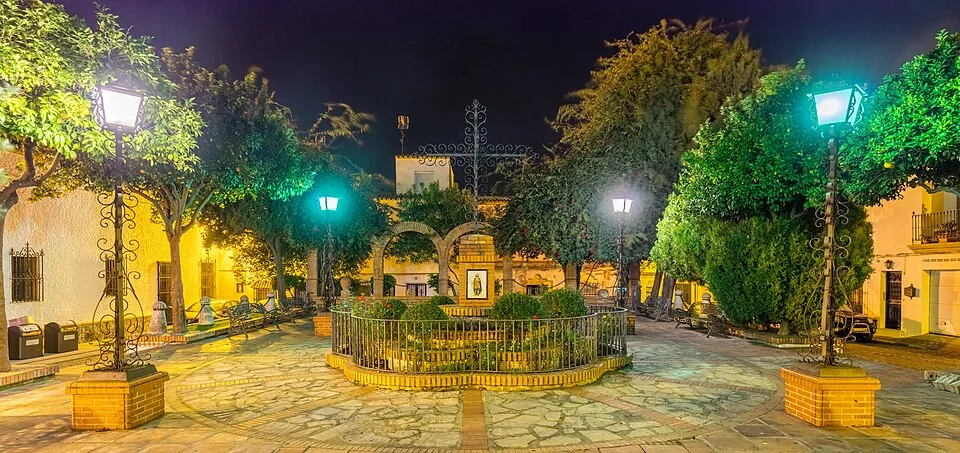
San Isidro reveals itself at the pace of its slopes. Leaving the busiest streets behind, the visit becomes intimate: an iron grille, a corner, a changing perspective after climbing a few metres. Here the whole matters as much as each detail, because the neighbourhood's appeal grows from a way of living in the city. San Isidro's heritage has both an urban and a devotional dimension. The chapel of San Isidro Labrador houses the images of Jesús de Medinaceli and María Santísima de la Esperanza. Its small square is a meeting place and a setting for cultural activities, while streets such as Gloria, Montereros, Ruiz Tagle and José Román form the network that defines the neighbourhood. The continuity between homes, narrow streets and shared spaces gives value to this everyday landscape, made for slow exploration. Notice the scale of the façades, the ironwork of the grilles and the relationship between cobbles and slopes. Pause in the small square and compare its atmosphere with Plaza Alta: both are places of community life, but their rhythms and dimensions differ. The best photograph often appears when you look back after a short climb, without entering doorways or intruding into private courtyards. Include the neighbourhood after Plaza Alta and before going down towards the market, leaving time to wander. Slopes and paving can be uncomfortable for some people; choose a route suited to your mobility. Stay on public streets and treat the place as what it is: a living neighbourhood, not a tourist stage set.
La historia que guarda este lugar
San Isidro se descubre a la velocidad de sus cuestas. Al abandonar las calles más transitadas, la visita se vuelve próxima: una reja, una esquina, el cambio de perspectiva al subir unos metros. Aquí interesa tanto el conjunto como cada detalle, porque el atractivo del barrio nace de una manera de habitar la ciudad.
El patrimonio de San Isidro tiene una dimensión urbana y otra devocional. La capilla de San Isidro Labrador guarda las imágenes de Jesús de Medinaceli y María Santísima de la Esperanza. Su plazoleta es un lugar de encuentro y actividad cultural, mientras calles como Gloria, Montereros, Ruiz Tagle y José Román dibujan el entramado que identifica al barrio. La continuidad entre casas, pequeñas calles y espacios compartidos da valor a este paisaje cotidiano, hecho para recorrerlo despacio.
Detente, mira, descubre
Presta atención a la escala de las fachadas, al hierro de las rejas y a la relación entre adoquines y pendientes. Detente en la plazoleta y compara su ambiente con el de Plaza Alta: ambos son espacios de convivencia, pero tienen ritmos y dimensiones diferentes. La mejor fotografía suele aparecer al mirar hacia atrás después de una pequeña subida, sin entrar en portales ni invadir patios privados.
Cómo disfrutar la visita
Incluye el barrio después de Plaza Alta y antes de bajar hacia el mercado, dejando margen para deambular. Las cuestas y el pavimento pueden resultar incómodos para algunas personas; elige un recorrido adecuado a tu movilidad. Mantén el paseo por calles públicas y trata el lugar como lo que es: un barrio vivo, no un decorado turístico.
Fuentes para conocer más
Descúbrelo dentro de un recorrido
San Isidro reveals an Algeciras of white houses, ironwork and cobbled streets. The small square and chapel anchor a neighbourhood walk, while its slopes are an important consideration when choosing your route.
What to look out for
- White houses and cobbles
- Small square and chapel
Planning your visit
Slopes and cobbles affect the walk: choose a route suited to your mobility needs.
The map
Approximate place locations, not hiking tracks.
Before you go
Check the official source for current access and conditions.
Confirm access, opening hours and conditions with the official source. Follow signs and check restrictions in natural areas. We do not offer verified GPX tracks.
Sources consulted
www.algeciras.es ↗Sources reviewed · 2026-09-12