ALGECIRAS · RECORRIDO A PIE
Del jardín histórico a la ciudad amurallada
Un paseo breve y continuo por tres capas de Algeciras: el jardín del siglo XIX, la fortificación medieval y la plaza que reúne la vida actual del centro. Una buena elección para una primera visita sin intentar verlo todo de una vez.
Dos horas orientativas, con descansos · 4 paradas
Favourites and visits are saved only in this browser. They do not sync across devices.
TU PASEO, PARADA A PARADA
Abre el recorrido y empieza a caminar
Las paradas se visitan en este orden. Google Maps calcula el camino peatonal; las indicaciones de cada tramo te cuentan qué buscar al llegar.
0 de 4 paradas visitadas · guardado en este dispositivo
En recorridos largos dividimos el enlace para conservar todas las paradas en móvil. Comprueba aperturas y señalización; la navegación puede variar por obras o accesos.Read the transcript
From the historic garden to the walled city
A short, continuous walk through three layers of Algeciras: the nineteenth-century garden, medieval fortification and the square gathering today's city-centre life. A good choice for a first visit without trying to see everything at once.
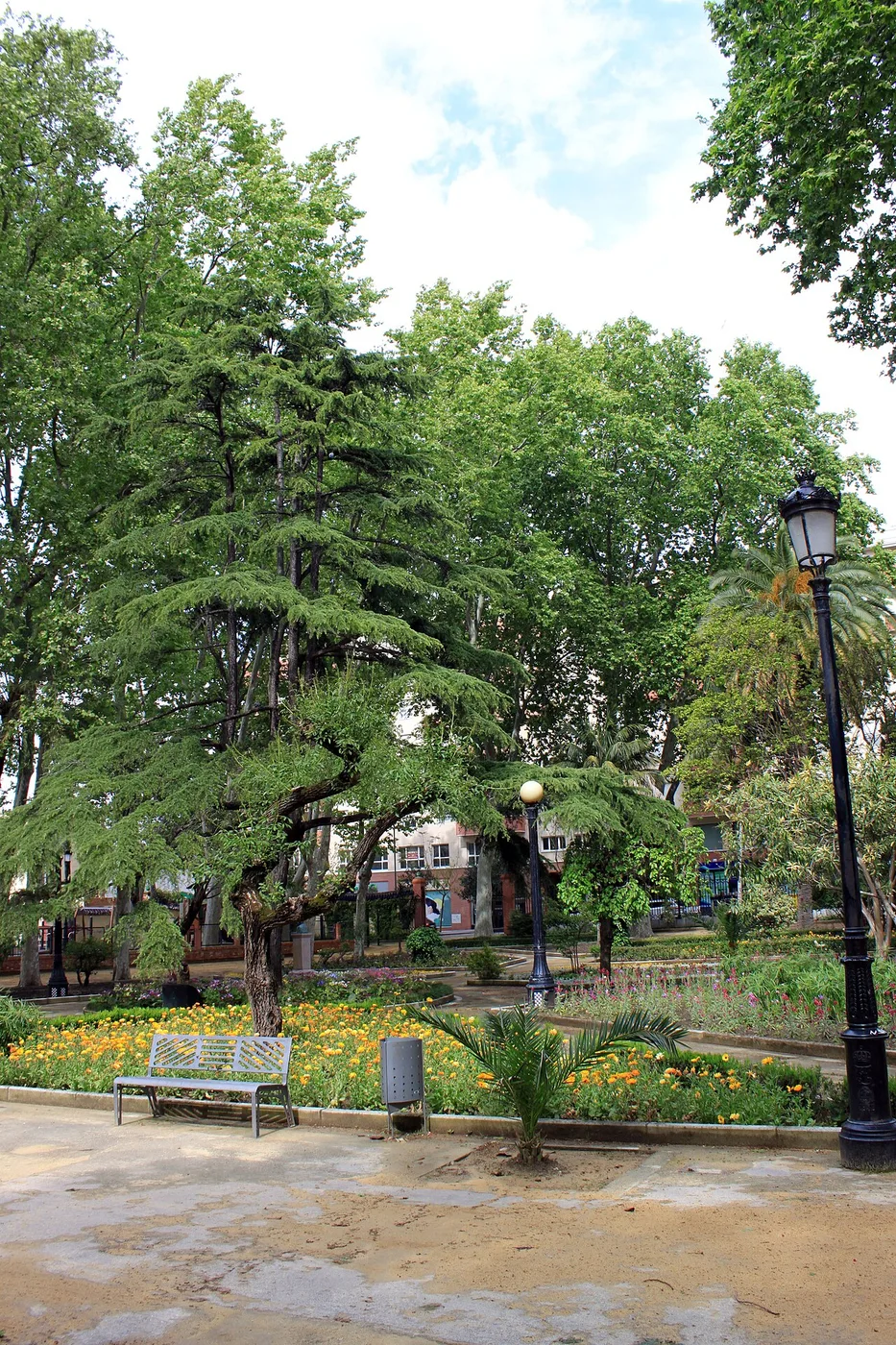
Parque María Cristina offers another reading of the centre: walks that need no destination. Entering changes the scale of the journey. After squares and façades, your attention turns to trees, paths and the possibility of sitting for a while before continuing to discover Algeciras. Its origins go back to 1834, when it was created on land donated by Agustín Bálsamo at General Canterac's request. The initial design followed the geometry of French gardens, with intersecting straight paths. It began outside the urban core of the time and now makes it possible to appreciate how much the city has grown around it. The municipal account includes it within Andalusian historic heritage as a garden of cultural interest. Walk along a main axis and then take a cross path: this makes the garden's structure easier to recognise. Observe how vegetation changes the light and how seating areas distribute the life of the park. Rather than seeking a single spectacular tree, try to read the whole as living architecture, where perspectives and pauses are also part of the design. This is a good stop between La Bajadilla, the walls and the historic centre. You can make a quiet visit or include it as a rest in a longer cultural itinerary. Check that day's access if coming at an unusual time; an urban garden does not have the same conditions as a square that is always open. Do not assume a concert is scheduled without consulting the programme.
Explore the park first and leave on the Blas Infante side. Continue to the wall complex using pavements and marked crossings; pause to understand the moat and entrances before moving on.
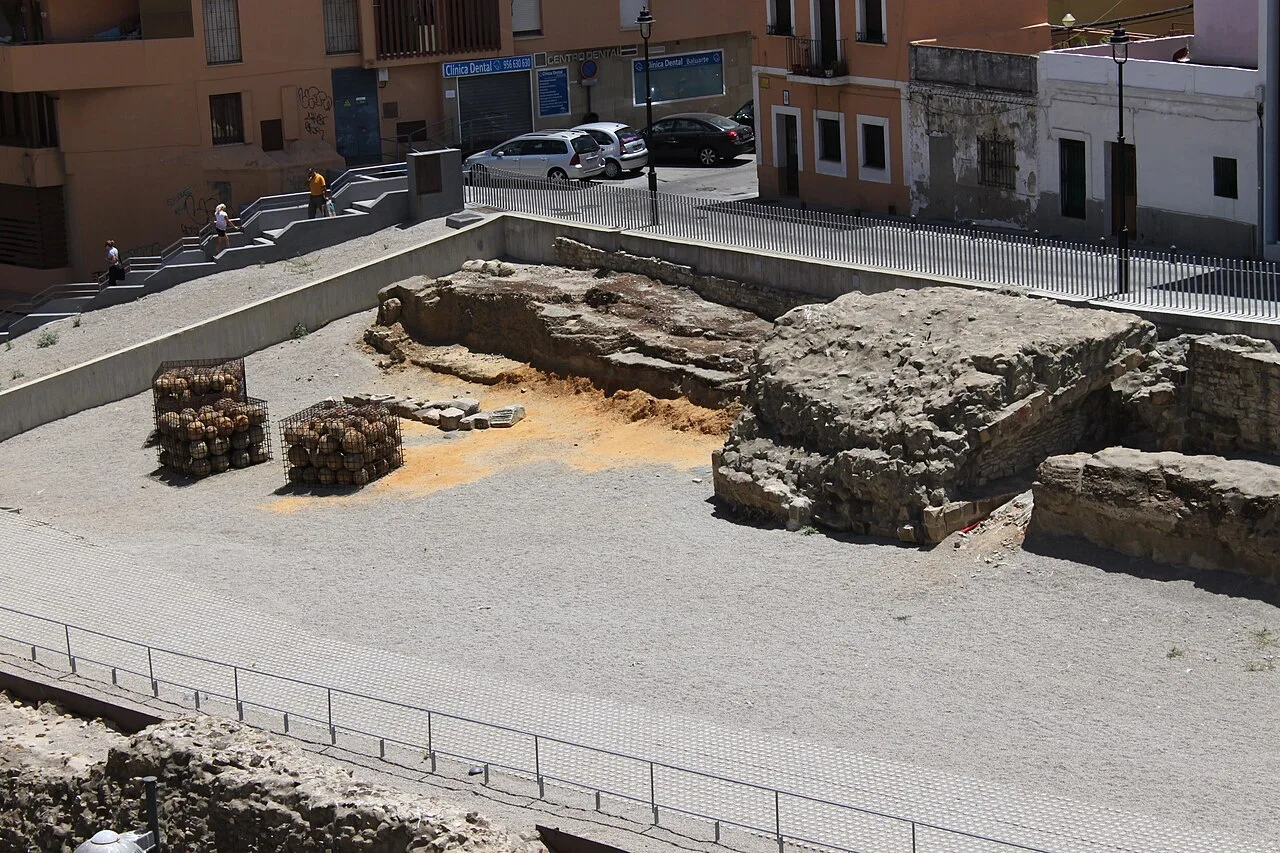
Among today's streets, a different Algeciras appears: a city that needed to control its entrances, defend its port and negotiate its place between two shores. The medieval walls are not a backdrop for a quick photograph. They invite you to imagine crossing an urban boundary when a gate had military importance. The surviving complex belongs to the Marinid fortification built between 1279 and 1285. Its remains reveal stretches of wall, towers, an outer wall and a moat, as well as the entrance associated with the Puerta del Fonsario. The name refers to the cemetery outside the enclosure. The destruction of the city in the fourteenth century and the later reoccupation of its site explain why we now read the defensive system through fragments and excavations. Begin by looking at the distance between the wall and the moat. Then identify the changes of direction in the approach: what matters is not just a wall's height, but how it controls the movement of someone trying to enter. Compare the remains with the level of modern streets to perceive the layering of cities. Follow the panels and distinguish original remains from later presentation work. The municipal walk connects the Alfonso XI area with Avenida Virgen del Carmen. Explore the designated areas and check the interpretation centre's opening times if you want to extend the visit. From here, Plaza Alta forms a logical continuation through the city; the contrast between medieval fortification and modern square is one of the best introductions to local history.
From the Alfonso XI area, follow the street towards Plaza Alta. This connection lets you compare the defensive layout just observed with the open city surrounding the square.
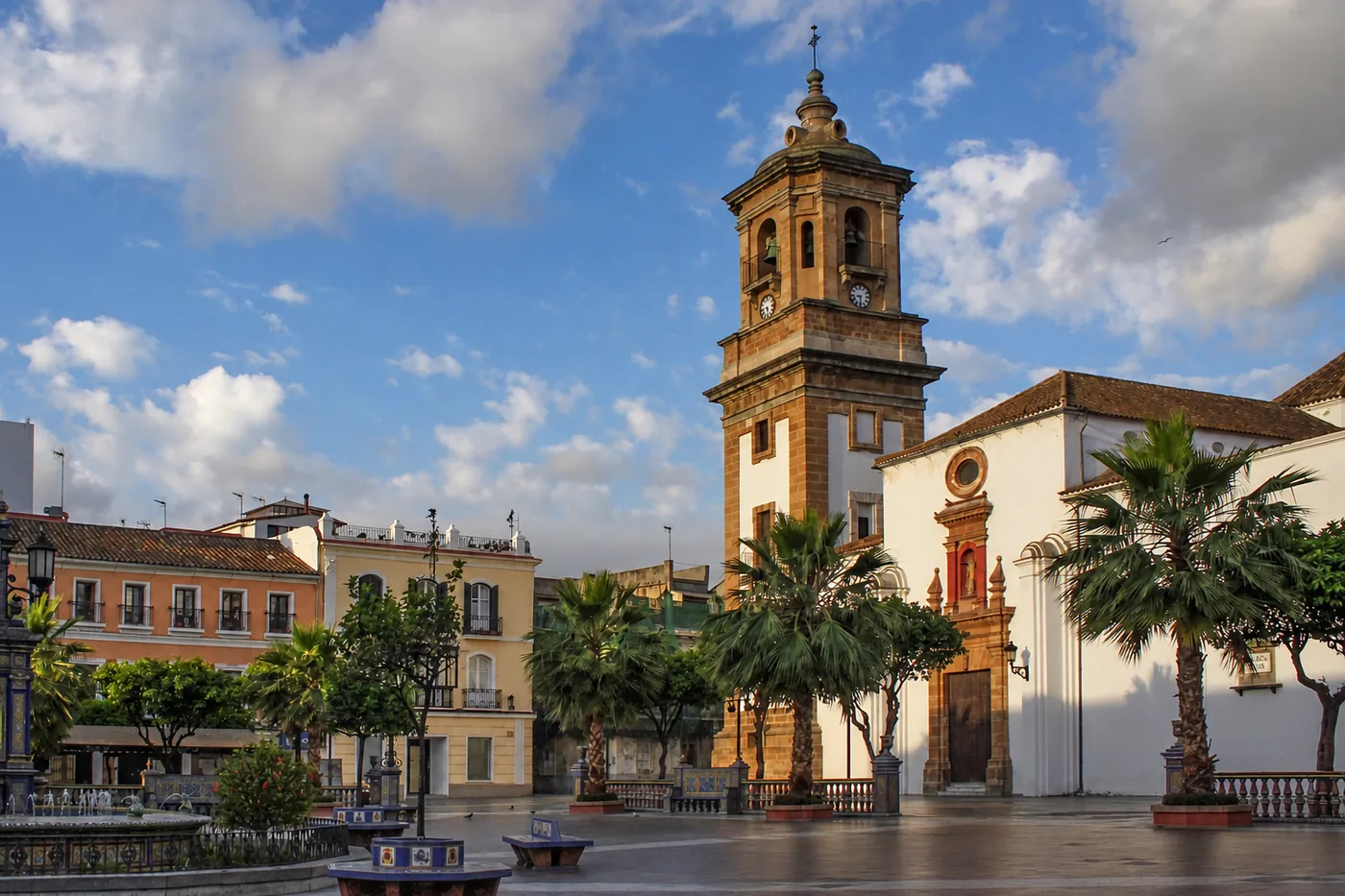
Algeciras is easier to understand when you stop simply passing through and learn to linger. Plaza Alta invites you to do just that: sit down, watch the streets meet and discover a city in conversation around its most recognisable space. Ceramics and religious façades turn an everyday pause into a first lesson in urban history. The square was laid out in 1807 on the initiative of General Castaños and was initially called Plaza del Almirante. Its obelisk disappeared in 1926; three years later, the ceramic paving was commissioned from workshops in Seville. This succession of alterations and names explains why the place is the creation of many eras, rather than an untouched scene from the past. The city has recorded its political changes and its ways of occupying public space here. Walk around once to take in the whole square, then again to follow the details in the paving. Compare the presence of La Palma with the more intimate scale of the Europa chapel: two ways of giving shape to the same square. Then find a bench overlooking the entrances of the streets. The visit becomes richer when you also watch the comings and goings of those who use this place every day. Allow yourself a proper pause before continuing towards the market or San Isidro. You can visit the square regardless of whether the churches are open; if you want to enter them, check their opening times separately. This is the best place to begin the centre's monumental walk and return to when you finish.
Complete your circuit of Plaza Alta at the Europa chapel. Finish here or rest in the square before returning: this itinerary is designed to enjoy how close its stops lie to one another.
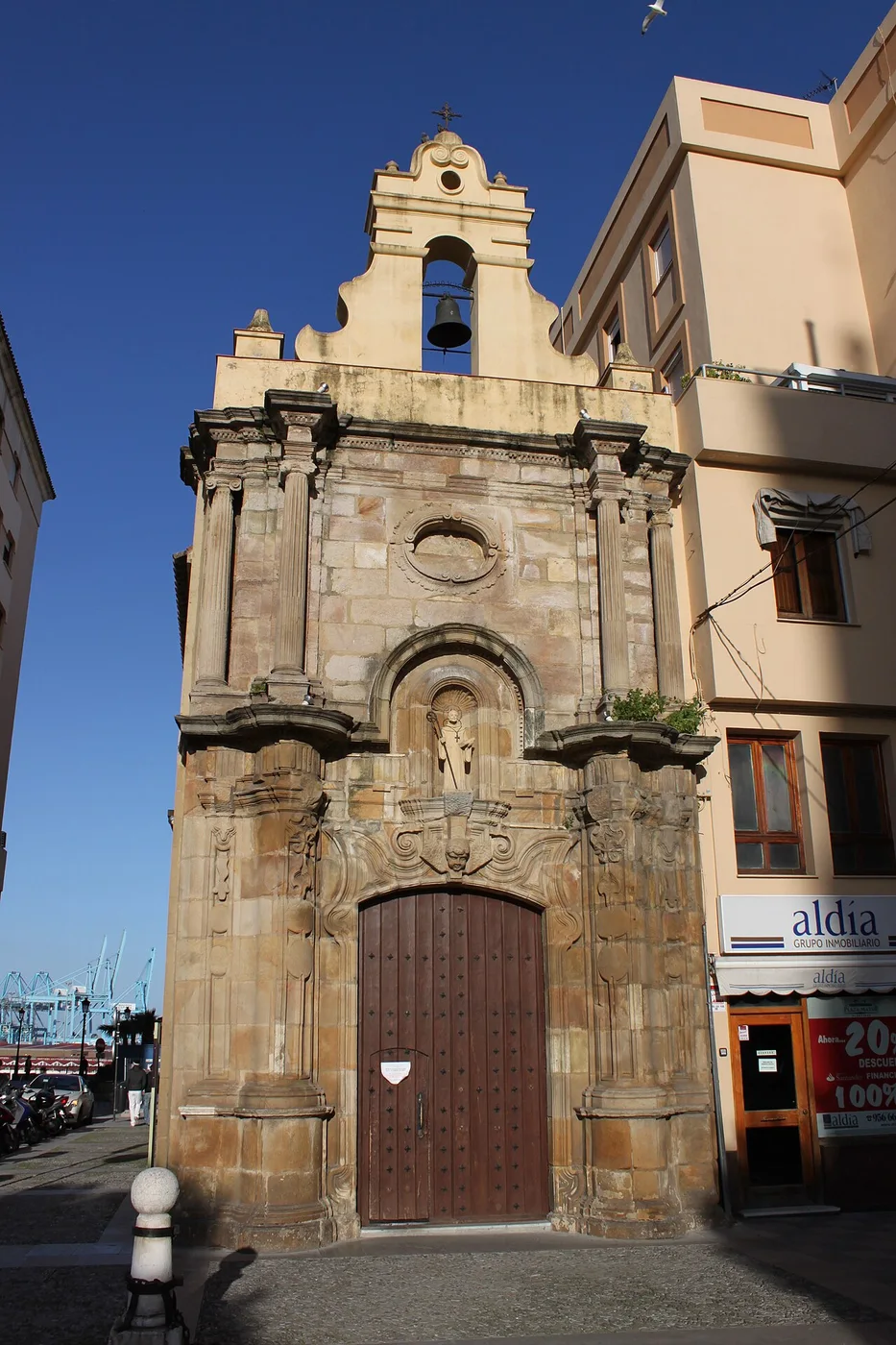
On one side of Plaza Alta, the Sanctuary of Nuestra Señora de Europa offers a visit that is small in scale and great in significance. Against the movement of the square, its presence invites close attention: some places matter not because they are monumental, but because of everything they have accompanied through time. The city's historical account connects the arrival of people from Gibraltar in 1704 with a hermitage belonging to the Gálvez family, identified with the present chapel. This context places the church within the rebirth of modern Algeciras. The municipal description also recalls a period of closure and use as a carpentry workshop before restoration and the return of religious use: heritage can lose its purpose and find it again. First consider the relationship between façade, square and side streets. If the sanctuary is open, look at the images of Cristo Atado a la Columna and María Santísima de las Lágrimas, associated with Holy Monday in Algeciras. Rather than collecting photographs, spend a few minutes understanding how devotion keeps a building alive and gives it a place in a community's calendar. The exterior stop fits naturally between Plaza Alta and the descent towards Calle Real. To enter, respect services and confirm opening times; continuous tourist access should not be assumed. Combine this visit with La Palma to recognise two scales of religious heritage without leaving the historic heart.
Ubicación de las paradas. Para seguir el camino entre ellas, abre las indicaciones de cada tramo.
PARADA 01 · Algeciras
María Cristina Park

Parque María Cristina · Resized for the web · Images and licences ↗
El Parque María Cristina ofrece otra lectura del centro: la de los paseos que no necesitan una meta. Entrar aquí cambia la escala del viaje. Después de recorrer plazas y fachadas, la atención se dirige a los árboles, los senderos y la posibilidad de sentarse un rato antes de seguir descubriendo Algeciras.
La historia que estás viendo
Su origen se remonta a 1834, cuando se creó en terrenos cedidos por Agustín Bálsamo a petición del general Canterac. El diseño inicial siguió la geometría de los jardines franceses, con caminos rectos que se cruzaban. Nació fuera del núcleo urbano de entonces y hoy permite percibir cuánto ha crecido la ciudad alrededor. La referencia municipal lo incluye en el patrimonio histórico andaluz como jardín de interés cultural.
Fíjate en este detalle
Recorre un eje principal y luego toma un camino transversal: así resulta más fácil reconocer la estructura del jardín. Observa cómo la vegetación modifica la luz y cómo las zonas de estancia distribuyen la vida del parque. Más que buscar un árbol espectacular aislado, intenta leer el conjunto como una arquitectura vegetal, donde las perspectivas y las pausas también forman parte del diseño.
Es una buena parada entre la Bajadilla, las murallas y el centro histórico. Puedes dedicarle una visita tranquila o incorporarlo como descanso en un itinerario cultural más largo. Comprueba el acceso del día si vas a una hora poco habitual; las condiciones de un jardín urbano no equivalen a las de una plaza siempre abierta. No des por programado ningún concierto sin consultar la agenda.
Recorre primero el parque y sal por el lado de Blas Infante. Continúa hasta el conjunto de las murallas usando aceras y pasos señalizados; dedica una parada a entender foso y accesos antes de avanzar.
Seguir este tramo en Google Maps ↗PARADA 02 · Algeciras
Medieval walls

Murallas medievales · Resized for the web · Images and licences ↗
Entre las calles actuales aparece una Algeciras distinta: la ciudad que necesitaba controlar sus entradas, defender su puerto y negociar su lugar entre las dos orillas. Las murallas medievales no son un fondo para una foto rápida. Son una invitación a imaginar cómo se atravesaba una frontera urbana cuando una puerta tenía valor militar.
La historia que estás viendo
El conjunto conservado corresponde a la fortificación meriní levantada entre 1279 y 1285. Sus restos permiten reconocer lienzos, torres, antemuro y foso, además del acceso relacionado con la Puerta del Fonsario. El nombre alude al cementerio situado fuera del recinto. La destrucción de la ciudad en el siglo XIV y la posterior reocupación de su solar explican que hoy leamos el sistema defensivo a través de fragmentos y excavaciones.
Fíjate en este detalle
Empieza mirando la distancia entre la muralla y el foso. Después identifica los cambios de dirección del acceso: lo importante no es solo la altura de un muro, sino cómo condiciona el movimiento de quien intenta entrar. Compara los vestigios con el nivel de las calles modernas para percibir la superposición de ciudades. Sigue los paneles y distingue restos originales de intervenciones de presentación.
El paseo municipal vincula el entorno de Alfonso XI con la avenida Virgen del Carmen. Recorre las zonas habilitadas y consulta la apertura del centro de interpretación si deseas ampliar la visita. Desde aquí, Plaza Alta queda integrada en una continuación urbana lógica; el contraste entre fortificación medieval y plaza moderna es una de las mejores introducciones a la historia local.
Desde el entorno de Alfonso XI sigue la calle hacia Plaza Alta. El enlace permite comparar el trazado defensivo que acabas de observar con la ciudad abierta que aparece alrededor de la plaza.
Seguir este tramo en Google Maps ↗PARADA 03 · Algeciras
Plaza Alta
Modified viewpoint; some details may differ from the actual place. Images and licences ↗
Algeciras se entiende mejor cuando se deja de atravesarla y se aprende a quedarse. Plaza Alta invita justamente a eso: sentarse, mirar cómo se cruzan las calles y descubrir una ciudad que conversa alrededor de su espacio más reconocible. La cerámica y las fachadas religiosas convierten una pausa cotidiana en una primera lección de historia urbana.
La historia que estás viendo
La plaza se trazó en 1807 por iniciativa del general Castaños y recibió inicialmente el nombre de Plaza del Almirante. Su obelisco desapareció en 1926; tres años después se encargó a talleres sevillanos la solería cerámica. Esa sucesión de reformas y nombres explica que el lugar sea una construcción de muchas épocas, no una escenografía intacta del pasado. La ciudad ha ido escribiendo aquí sus cambios políticos y su manera de ocupar el espacio público.
Fíjate en este detalle
Haz una primera vuelta mirando el conjunto y otra siguiendo los detalles del pavimento. Compara la presencia de La Palma con la escala más recogida de la capilla de Europa: dos maneras de ordenar una misma plaza. Busca después un banco desde el que ver las entradas de las calles. La visita gana cuando se observa también el ir y venir de quienes utilizan este lugar todos los días.
Reserva una pausa real antes de continuar hacia el mercado o San Isidro. Puedes visitar la plaza sin depender de la apertura de los templos; si quieres entrar en ellos, comprueba sus horarios por separado. Es el mejor punto para comenzar el recorrido monumental del centro y regresar al terminar.
Completa la vuelta a Plaza Alta hasta la capilla de Europa. Termina aquí o descansa en la plaza antes de regresar: este itinerario está pensado para disfrutar la proximidad de sus paradas.
Seguir este tramo en Google Maps ↗PARADA 04 · Algeciras
Shrine of Nuestra Señora de Europa

Santuario de Nuestra Señora de Europa · Resized for the web · Images and licences ↗
A un lado de Plaza Alta, el Santuario de Nuestra Señora de Europa propone una visita pequeña en escala y grande en significado. Frente al movimiento de la plaza, su presencia invita a mirar con atención: hay lugares cuya importancia no está en la monumentalidad, sino en todo lo que han acompañado a lo largo del tiempo.
La historia que estás viendo
La historia municipal vincula el asentamiento de población procedente de Gibraltar en 1704 con una ermita de la familia Gálvez, identificada con la actual capilla. Ese contexto permite entender el templo dentro del renacimiento de la Algeciras moderna. La ficha municipal recuerda también una etapa de cierre y uso como carpintería antes de su rehabilitación y recuperación religiosa: el patrimonio puede perder su función y volver a encontrarla.
Fíjate en este detalle
Contempla primero la relación entre fachada, plaza y calles laterales. Si el santuario está abierto, observa las imágenes del Cristo Atado a la Columna y María Santísima de las Lágrimas, vinculadas al Lunes Santo algecireño. Más que acumular fotografías, dedica unos minutos a comprender cómo las devociones mantienen vivo un edificio y lo incorporan al calendario de una comunidad.
La parada exterior encaja de forma natural entre Plaza Alta y el descenso hacia calle Real. Para entrar, respeta los actos de culto y confirma la apertura; no se presupone un horario turístico continuo. Combina esta visita con La Palma para reconocer dos escalas del patrimonio religioso sin desplazarte fuera del corazón histórico.